Hello, @till ,
I don’t think the quality score is currently displayed.
What’s happening with this feature, which started six months ago?
Hello, @eneerhut
Is there some information to publish about the fact that the quality score is no longer displayed on Mapillary Web?
The article on processing quality scores doesn’t seem to be of interest to anyone right now, so I decided to understand that the feature has already been discontinued.
without notice removed. Great.
1 Like
Neither the person who introduced this feature nor the top of the organization responds even by tagging, so they would like to hide this.
Winter  is back to the northern hemisphere. And, like every season, we see an ever increasing influx of useless bad quality imagery, like night time, rainy, foggy, and blurry imagery. I do not want to shame anybody but I just wish that QA would do a better job fighting bad image quality. Bad image quality is a pain in so many aspects. It not only is awful to view but also eats up valuable platform resources, clutters the map, and ultimately costs real
  money and time for everybody, including Mapillary and users. Image quality in mapping is not a matter of pretty or not but a matter of efficiency, effectiveness, and cost.


Furthermore, as you can see here, text overlays can indeed negatively impact other images and the platform overall. In these examples, 3D reconstruction has been messed up completely. Note also the tiny pie slice in the fov indicator and the greatly off set orange computed location. It means that 3D reconstruction was unable to properly compute lens parameters despite near perfect GPS data.
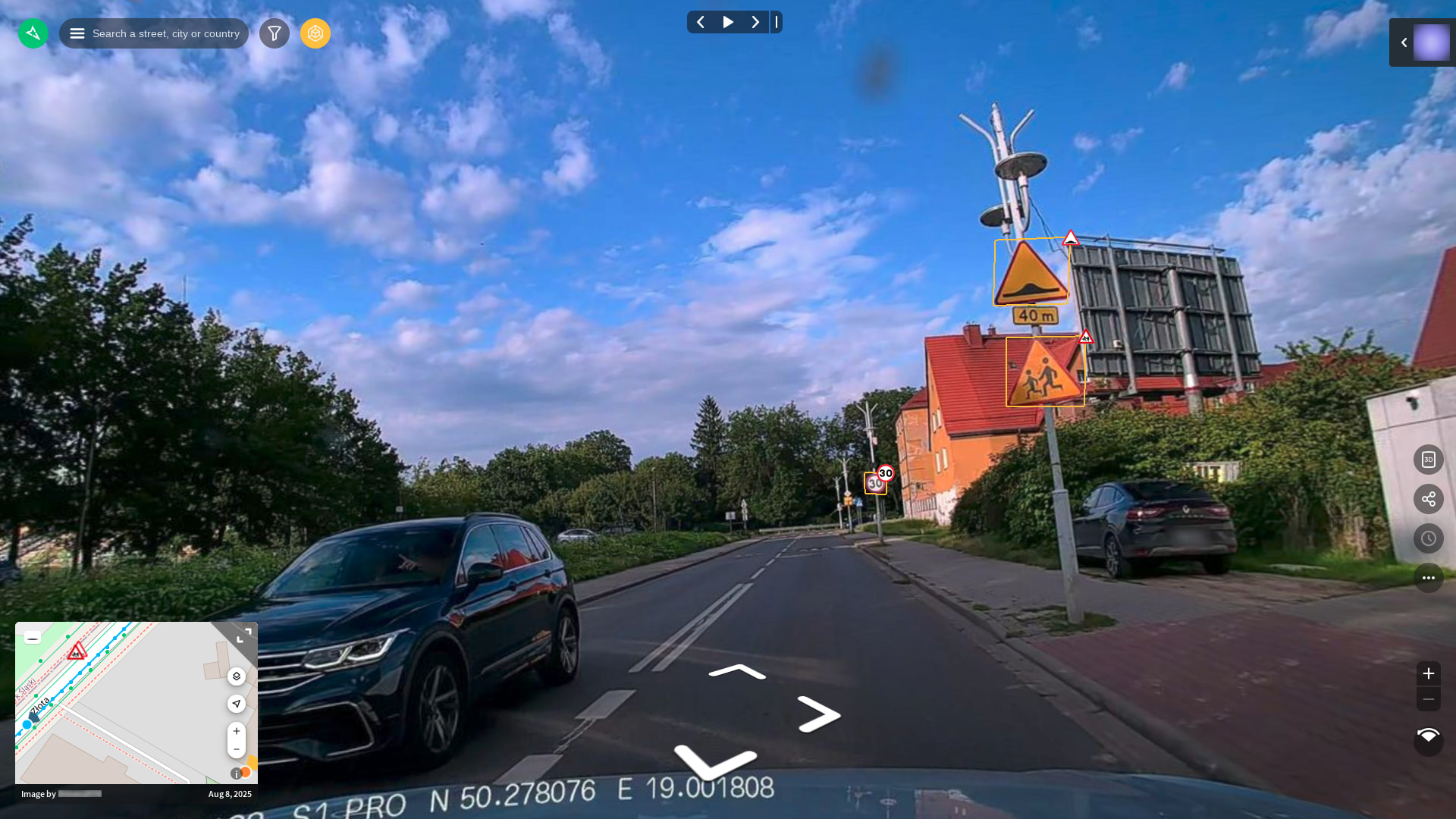
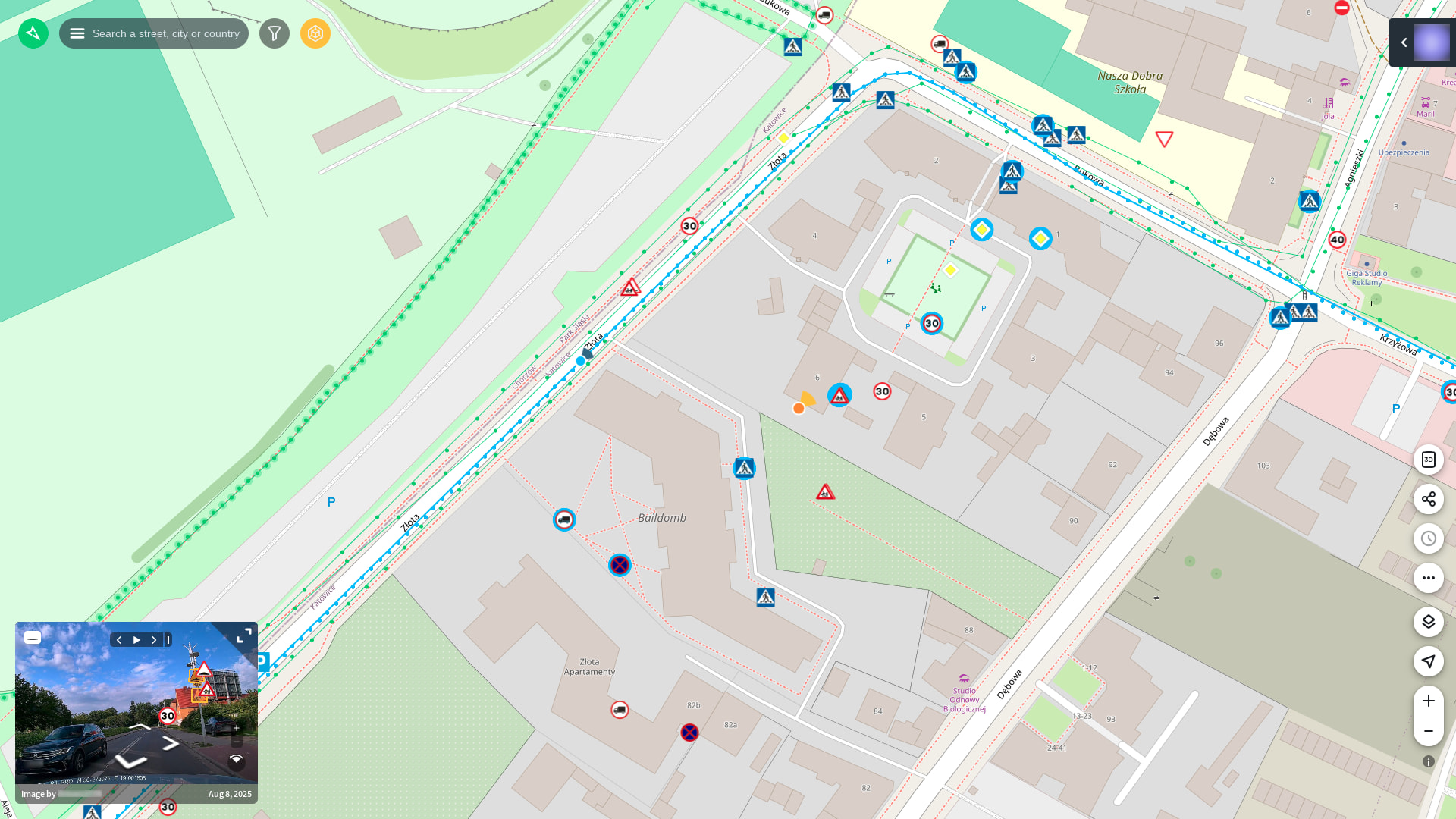
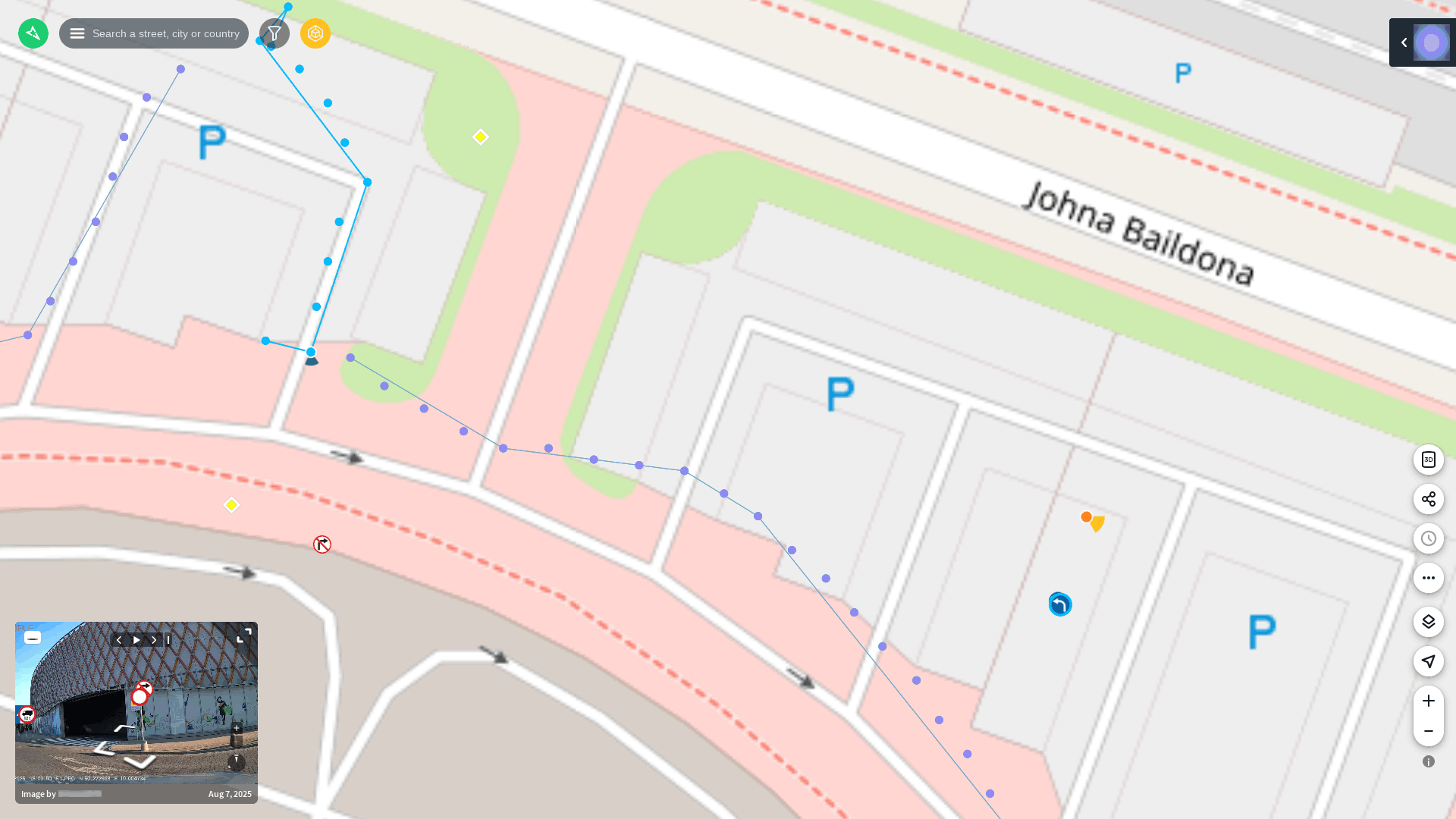

And honestly, I will not buy any cheap dismissive explanation that more imagery in such areas is going to automagically rectify this situation. Well, maybe it will, eventually. Who knows? But, it should not be this way in the first place. The question actually is whether QA even cares for the Mapillary ToU?
1 Like
This is a good point. We can also do more programmatically here (e.g. use CV to detect that an image is of poor quality - say dark, blurry etc) or use heuristics like the time the image was taken relative to sundown on that date. These are good opportunities to improve the quality - we’ll add this sort of work to the backlog.
1 Like
Right, this could be a good and relatively easy to implement start to filter out at least night time imagery because it is quite cheap to compute sunrise and sunset times for every position on the globe for like ±millions of years. The upload tools could issue a warning in such cases and also give contributors the option to override any such warnings.
Ideally, one would probably want to scrutinize imagery for other criteria on the edge as well because like with every database, there is more value in having a database of clean data than having a heap of garbage data that has to be filtered on every query later. Imho it is unfortunate that the Mapillary dataset is currently more of a mixed bag than a clean database.
Agreed - we can run these heuristics on already uploaded imagery as well and surface the “best” imagery more prominently - all good items for the backlog.